Vgrid
Vgrid - A unified framework for working with DGGS
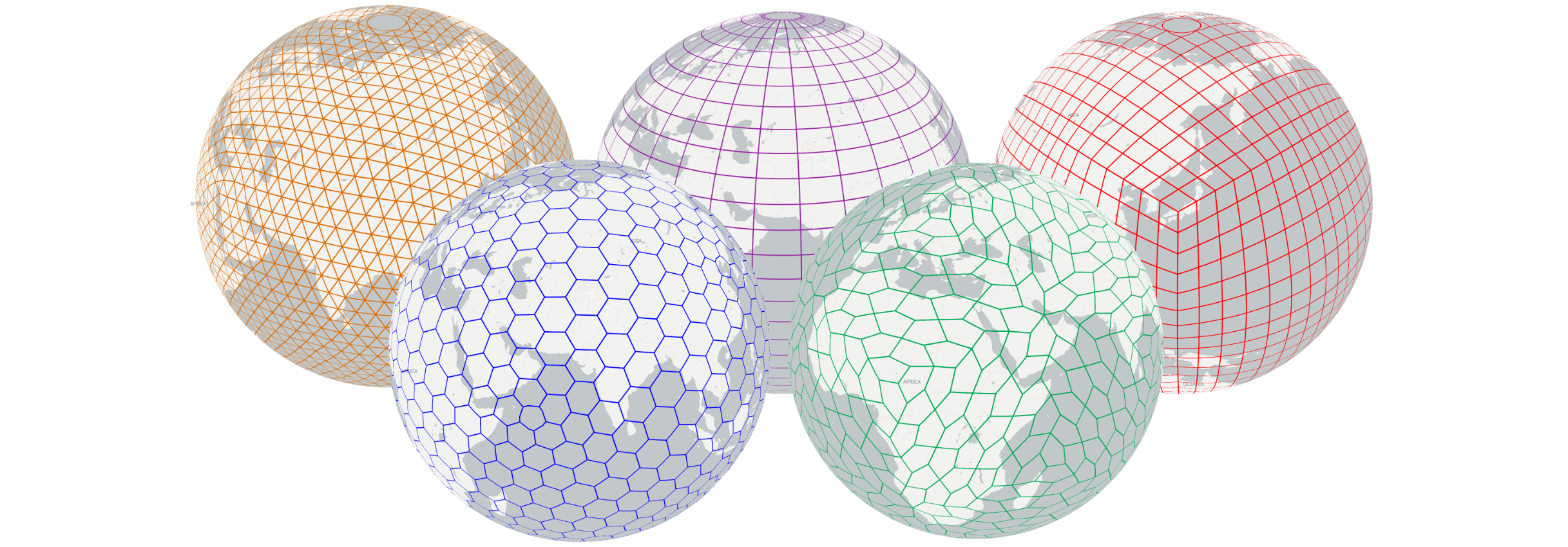
Vgrid supports a wide range of popular DGGSs, including H3, S2, A5, rHEALPix, DGGAL, DGGRID, Open-EAGGR ISEA4T, ISEA3H, EASE-DGGS, QTM, OLC, Geohash, GEOREF, MGRS, TileCode, Quadkey, Maidenhead and GARS.
Vgrid supports popular input and output GIS formats, including CSV, GeoJSON, Pandas/GeoPandas, Shapefile, GeoPackage, and GeoParquet.
Full Vgrid DGGS documentation is available at vgrid document.
To work with Vgrid DGGS directly in GeoPandas and Pandas, use the vgridpandas package. Full Vgridpandas DGGS documentation is available at vgridpandas document.
To work with Vgrid DGGS in QGIS, install the Vgrid Plugin.
To visualize DGGS in Maplibre GL JS, try the vgrid-maplibre library.
For an interactive demo, visit the Vgrid Homepage.







Citation
If you use Vgrid DGGS in your work, please cite it. Vgrid is archived on Zenodo

Acknowledgements
Vgrid is built upon free and open-source software and would like to acknowledge the maintainers and contributors of the following projects, together with the many transitive dependencies that make them possible.
- h3-py by Uber.
- s2sphere by Sidewalk Labs.
- a5-py by Felix Palmer and Thang Quach.
- rhealpixdggs-py by Manaaki Whenua – Landcare Research.
- open-eaggr by Riskaware.
- EASE-DGGS by GEMS-UMN.
- pydggal by Jerome St-Louis from Ecere.
- DGGRID by Kevin Sahr.
- dggrid4py by Alex Kmoch.
- QTM by Thang Quach, with reference to QTM by Paulo Raposo.
- Lat Lon Tools QGIS Plugin by Calvin Hamilton.
- geohash by Hiroaki Kawai.
- gars-field by Corteva Agriscience.
- Tilecode & Quadkey by Thang Quach, utilizing mercantile by Mapbox.
- antimeridian by gadomski.
- The DGGS Inspect feature in Vgrid is inspired by Area and shape distortions in open-source discrete global grid systems by Alex Kmoch et al. (2022) (resources).
- The Vgrid Document is inspired by leafmap developed by Qiusheng Wu from Open Geospatial Solutions.
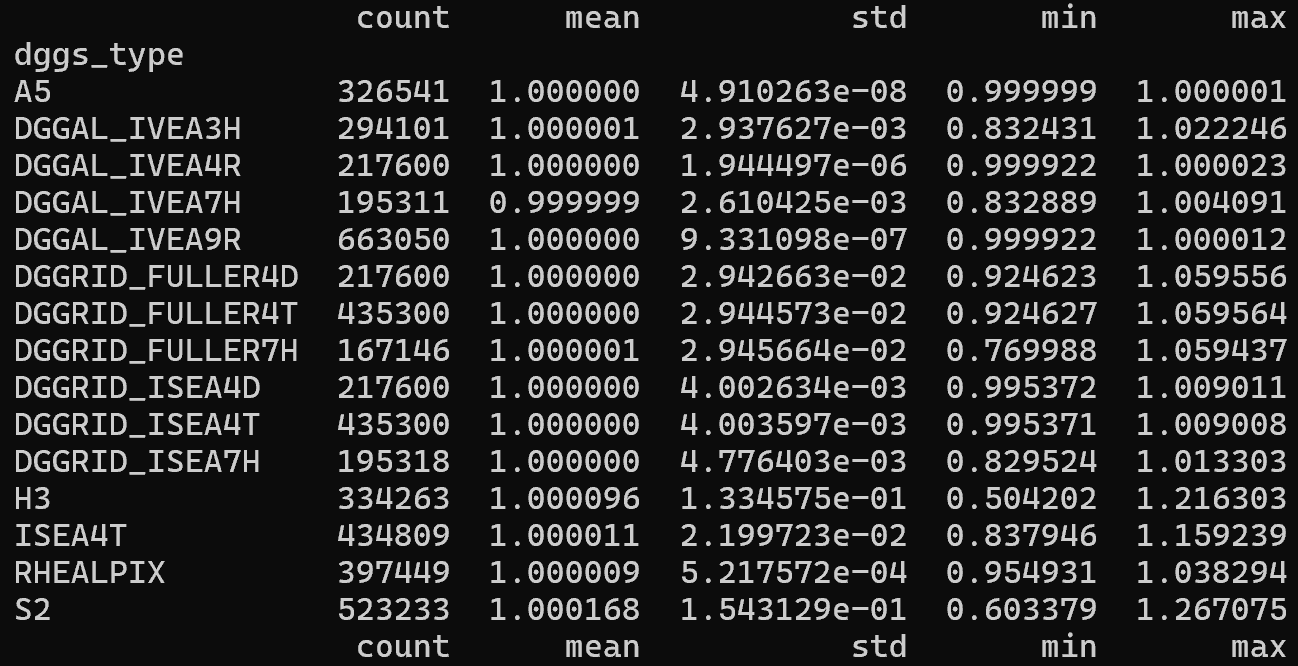
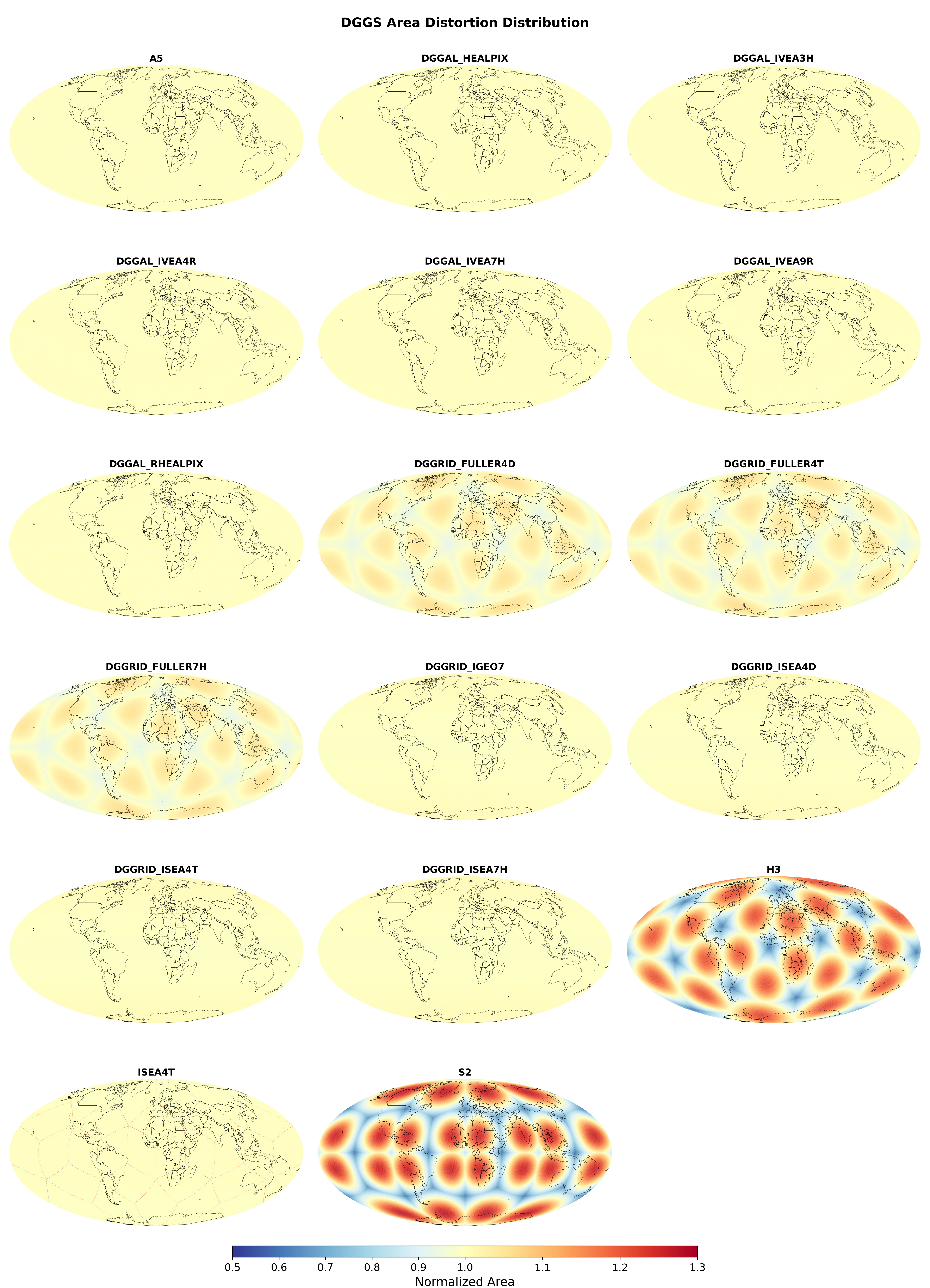
Area distortion over normalized areas of popular geodesic DGGS
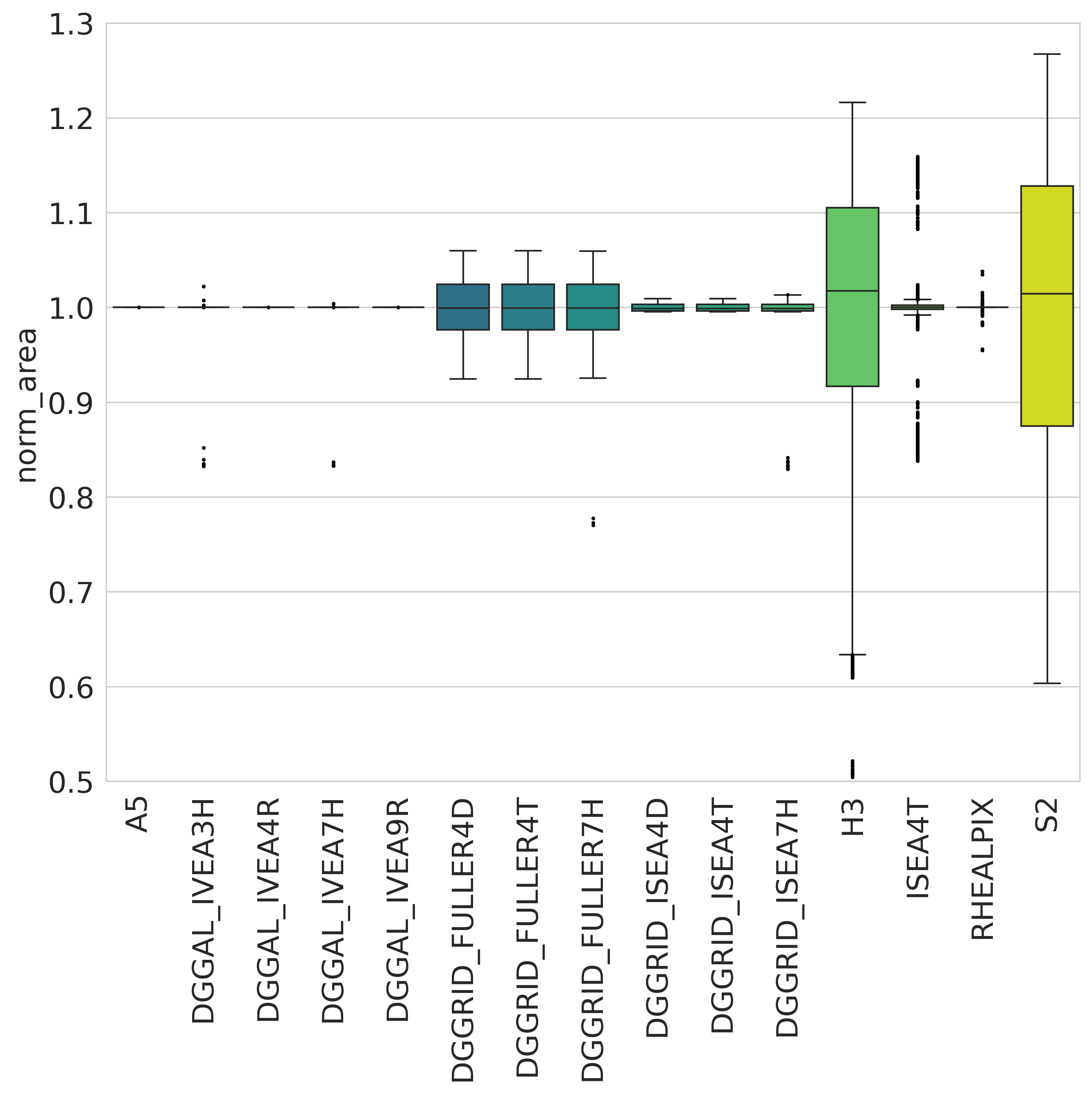
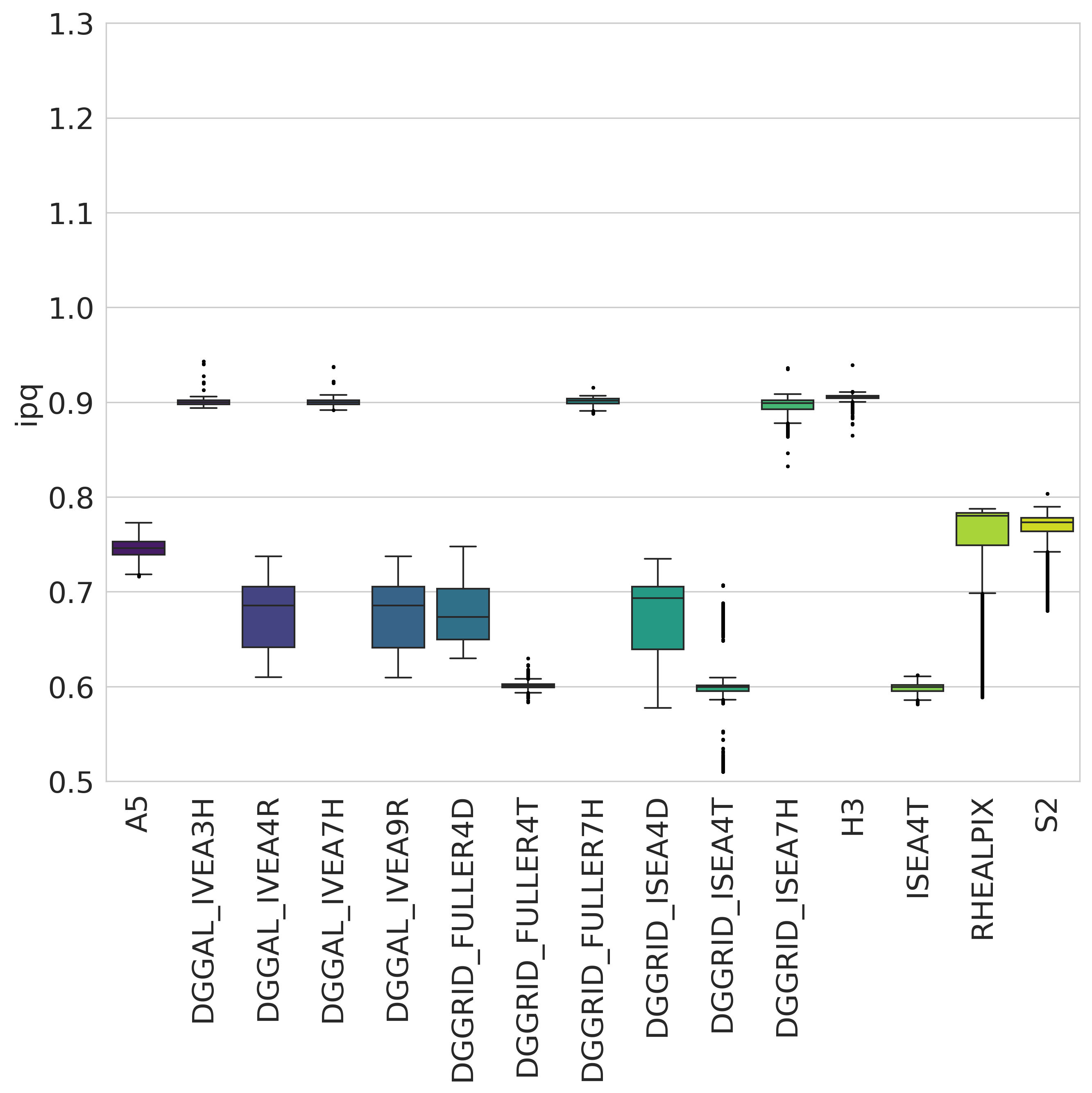
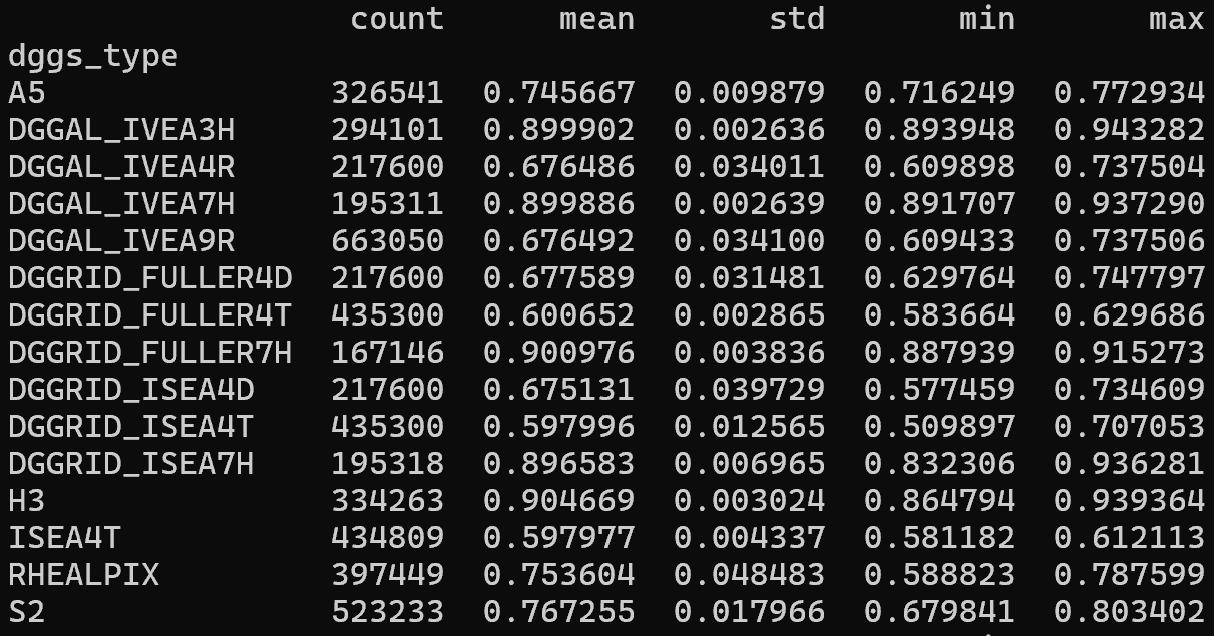
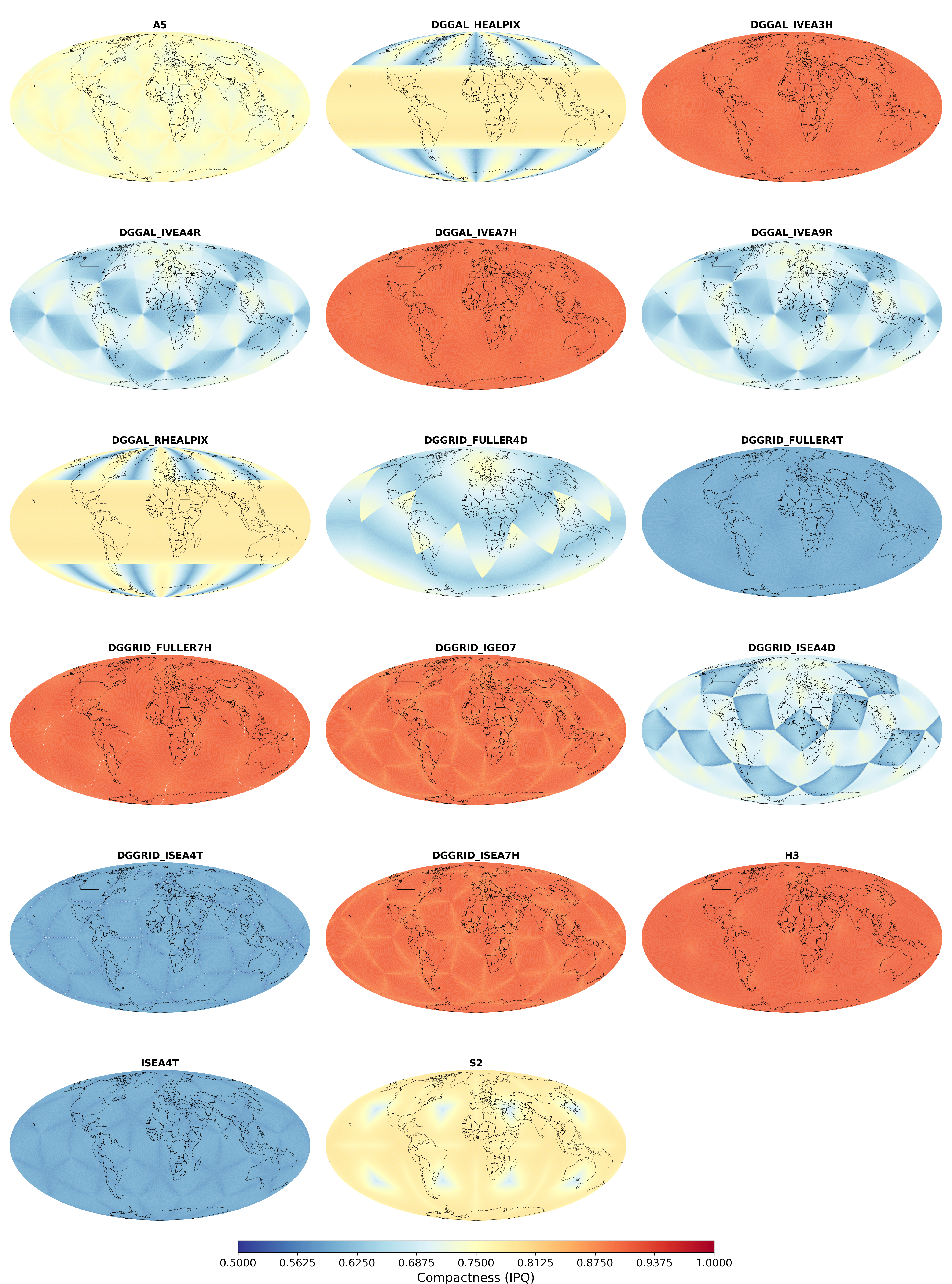
IPQ compactness distribution over popular geodesic DGGS
Isoperimetric Inequality (IPQ) Compactness (suggested by Osserman, 1978):
The range of the IPQ compactness metric is (0,1].
A circle represents the maximum compactness with a value of 1.
As shapes become more irregular or elongated, their compactness decreases toward 0.
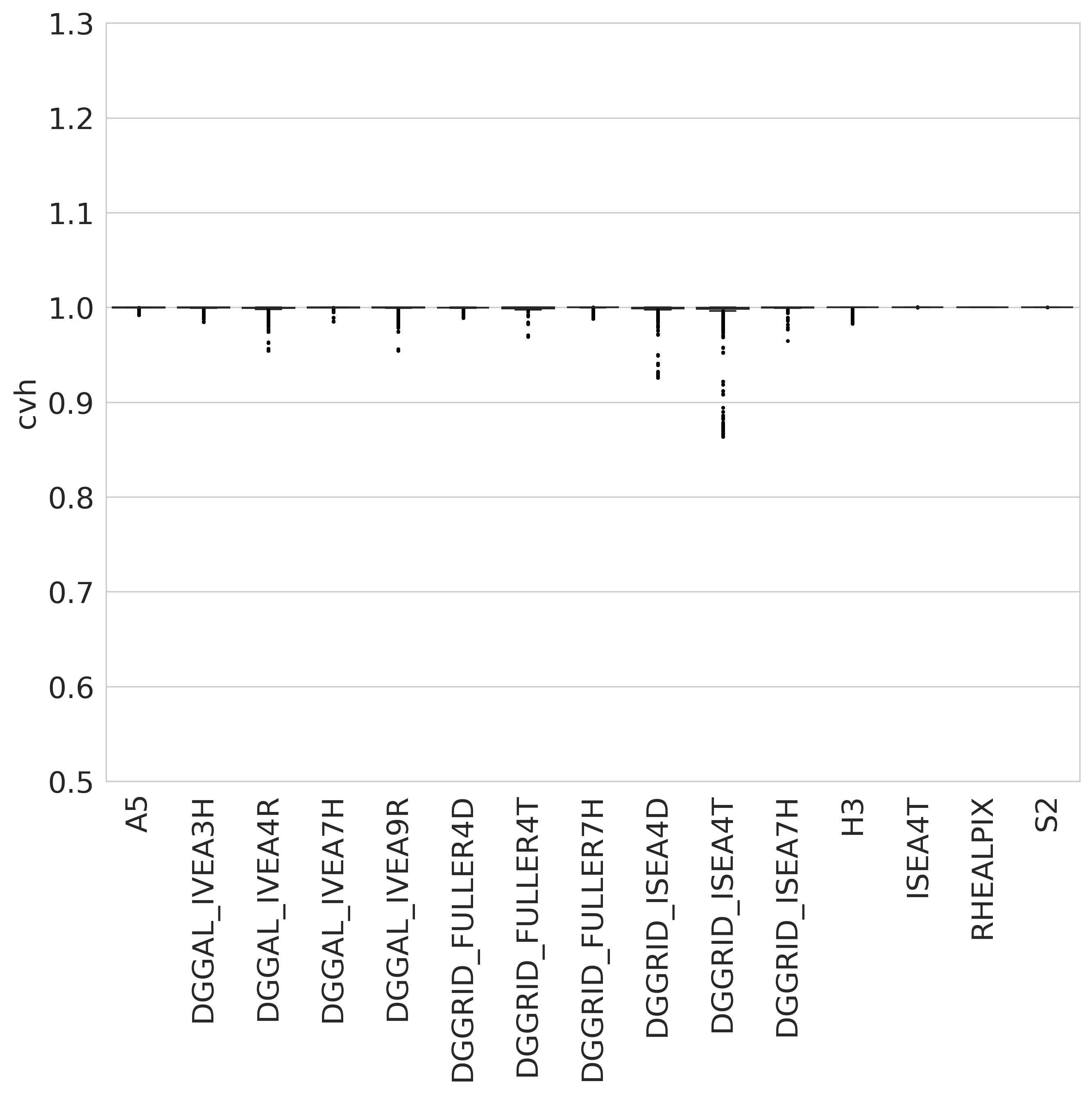
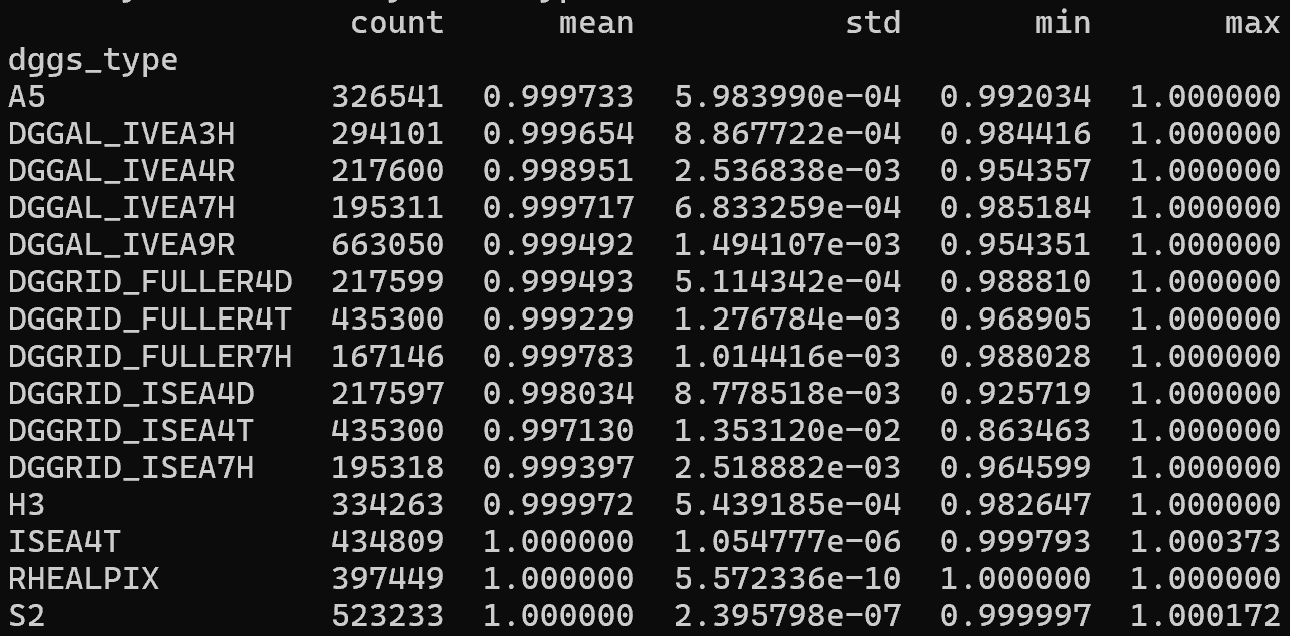
Convex hull compactness distribution over popular geodesic DGGS
The range of the convex hull compactness metric is (0,1].
As shapes become more concave, their convex hull compactness decreases toward 0.